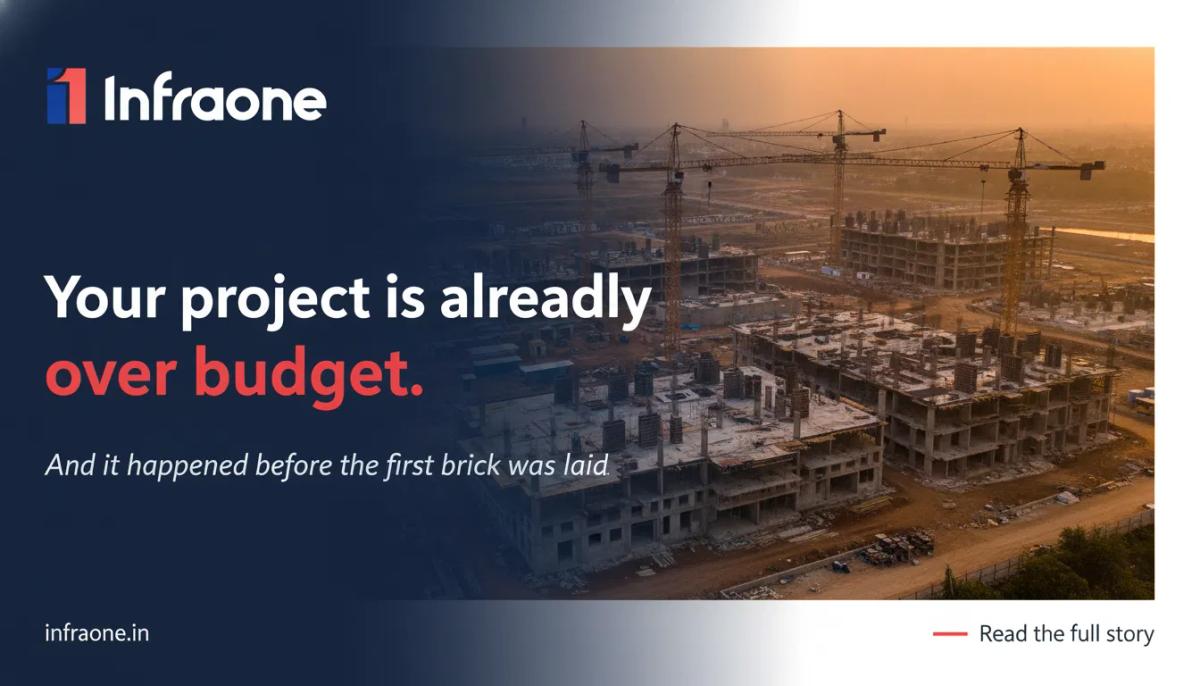
Why Construction Projects in India Run Over Budget Before the Work Even Starts
The Story Every Contractor Knows
Every contractor has a version of this story. The project is planned. The team is ready. The timeline is set. Then the materials don't arrive on time, the quoted rate changes, or the supplier runs out of stock at the most inconvenient moment. And suddenly a project that was budgeted carefully is already ₹2-3 lakhs over before the foundation is complete. The industry tends to blame this on inflation, market volatility, or bad luck. Rarely does it point at the actual culprit: a procurement system that was never designed to handle the scale of construction happening in India today.
What Procurement Actually Looks Like on the Ground
Here is what a typical procurement process looks like for a mid-size contractor. He has a requirement for cement and TMT steel. He calls his regular dealer. The dealer gives him a rate. He calls a second dealer to cross-check, writes down two numbers on a piece of paper, and makes a decision based on memory of what rates looked like last week. He places the order, waits for delivery, and follows up by phone three times before the truck actually shows up. This process has not changed in thirty years. But the industry around it has changed enormously.
A Sector That Has Outgrown Its Own Infrastructure
Indian construction is now one of the fastest-growing sectors in the world. Infrastructure spending is running at record levels. Private real estate is booming in tier-1 and tier-2 cities alike. The volume of material being procured has multiplied. But the method of procurement is still running on phone calls, personal relationships, and guesswork. Without the ability to compare rates across multiple suppliers simultaneously, contractors overpay on individual orders. Without reliable delivery tracking, projects face idle labor and schedule slippage. Without price transparency, there is no leverage in negotiation.
The Solution Is Already Here
This is not an aspirational vision for a distant future. These capabilities exist today. The contractors who are accessing them are building faster, spending less on procurement overhead, and finishing projects closer to their original budgets. The procurement problem in Indian construction is real. So is the solution.