What One-Stop Procurement Actually Means for a Construction Site
A Phrase That Needs to Mean Something
The phrase one-stop platform gets used a lot in technology. It has become almost meaningless from overuse. So it is worth being specific about what it actually means in the context of construction material procurement, and why it matters for every contractor running an active site.
The Hidden Cost of Managing Multiple Suppliers
For a contractor managing an active site, procurement involves multiple categories of material: cement, TMT steel, structural steel, AAC blocks, pipes, fittings, and more. Each category typically involves separate suppliers, separate negotiations, separate order tracking, and separate delivery coordination. A purchase manager at a mid-size construction firm might spend two to three hours a day just managing supplier communication for ongoing orders.
What One-Stop Actually Means in Practice
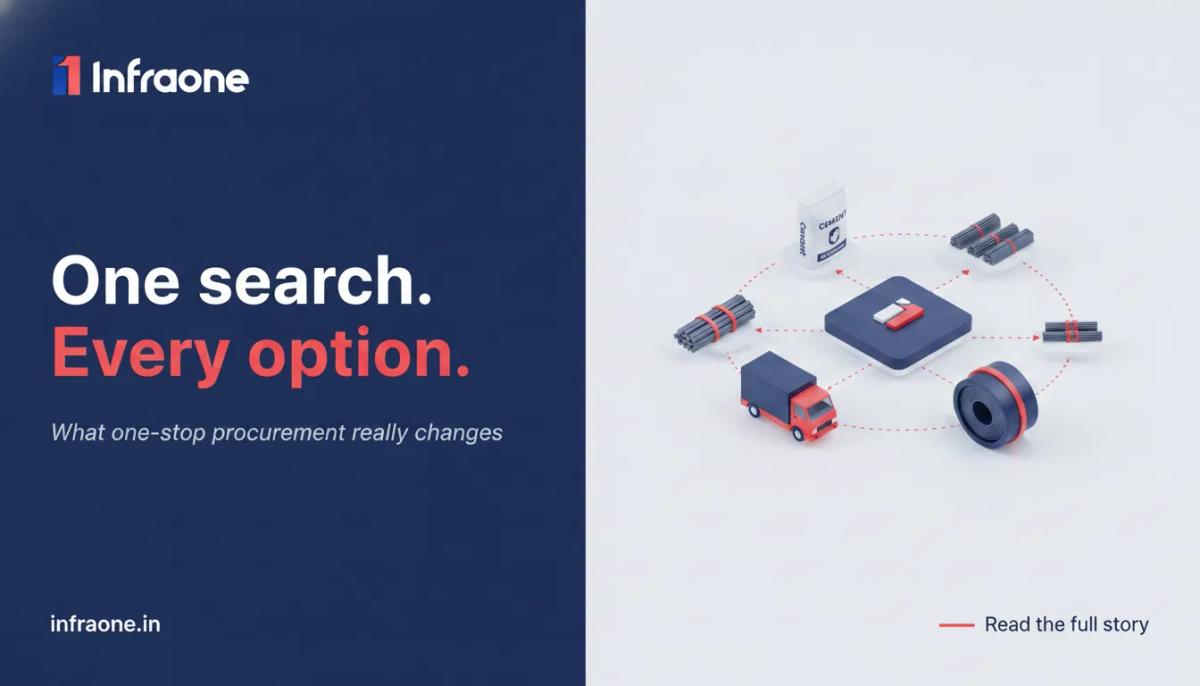
One-stop procurement means every category is available from a single platform, with verified suppliers, live rates, and real delivery tracking. It does not mean a single supplier for everything. It means a single interface through which the contractor can access many suppliers across many categories, compare options, and manage orders in one place. Instead of calling five suppliers to compare rates on cement, you search once and see all available options with current pricing.
Built to Remove Complexity, Not Add It
This is what Infraone is built to do. Not to add complexity to procurement, but to remove it. The contractor's job is to build. Procurement should support that, not consume half the working day. The construction material market in India is large, fragmented, and underserved by technology. The contractors who understand this and adopt better systems now will have a structural cost and efficiency advantage over those who continue to operate on phone calls and personal relationships alone.