Three Material Tests Every Site Should Run Before Accepting Delivery
Testing Is Not Optional. It Is Protection.
Most construction sites in India accept material deliveries on trust. The truck arrives, the bags are unloaded, and work continues. Testing happens rarely, and when it does, it happens too late.
The result is predictable. Substandard materials enter the structure undetected. Defects show up months or years later. And the cost of fixing them is always higher than the cost of checking at the point of delivery.
Test One: The Cement Fist Test
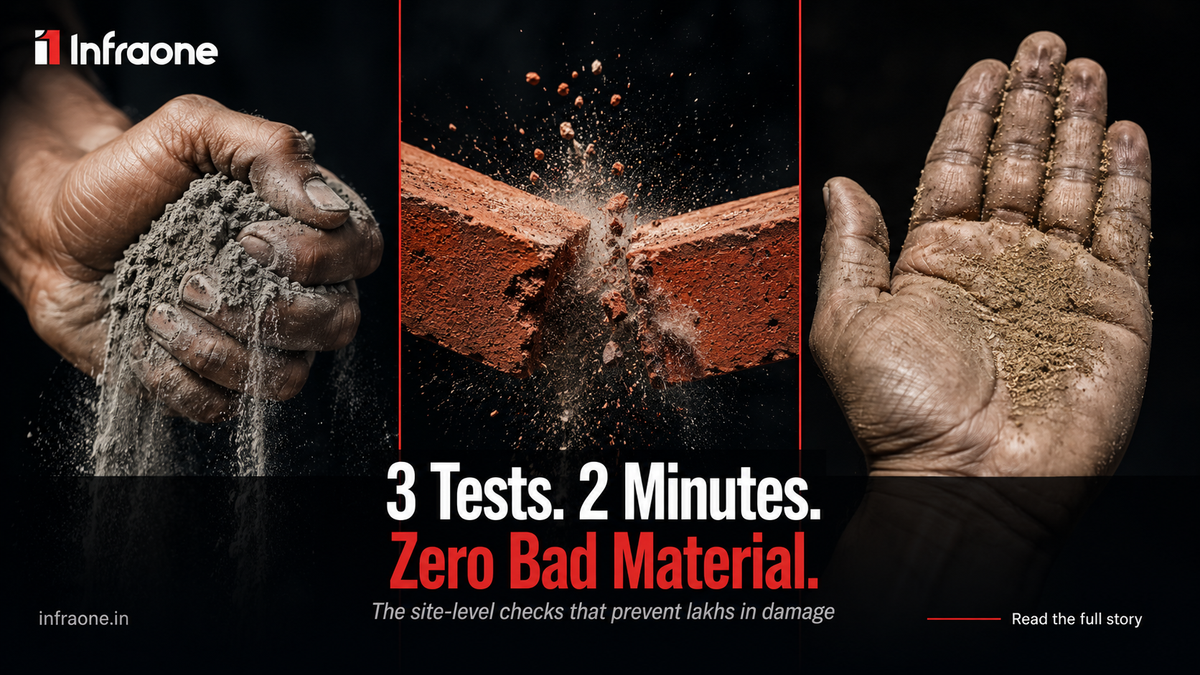
This takes two seconds. Take a fistful of cement from an open bag and squeeze it. If the powder flows smoothly through your fingers when you release, the cement is fresh and dry. If it holds its shape, or if you feel hard lumps, the cement has absorbed moisture and lost strength. Reject it immediately.
This simple test catches what no visual inspection can. Cement can look perfectly fine and still be compromised. The fist test reveals the truth instantly.
Test Two: The Brick Ring Test
Strike two bricks against each other firmly. A well-burnt, high-quality brick produces a clear, metallic ringing sound. An under-burnt or poorly manufactured brick produces a dull thud. The difference is unmistakable once you have heard both.
This test has been used for generations by experienced masons. It should be standard practice at every delivery point, performed by every site supervisor, on every batch without exception.
Test Three: The Sand Silt Test
Grab a fistful of sand and squeeze it, then open your hand. If the sand falls away cleanly and your palm is relatively clean, the silt content is acceptable. If your palm is coated with fine residue, the sand has excessive silt content and will weaken any concrete or mortar made with it.
For a more precise check, fill a glass jar with sand to one-quarter, fill the rest with water, shake vigorously, and let it settle for two hours. The silt layer visible on top should not exceed 8% of the sand layer. If it does, the sand should be washed or rejected.
The Two-Minute Habit That Prevents Lakhs in Damage
These three tests take less than two minutes combined. They require no equipment, no lab, and no special training. What they do require is the discipline to perform them on every delivery, every time, without exception.