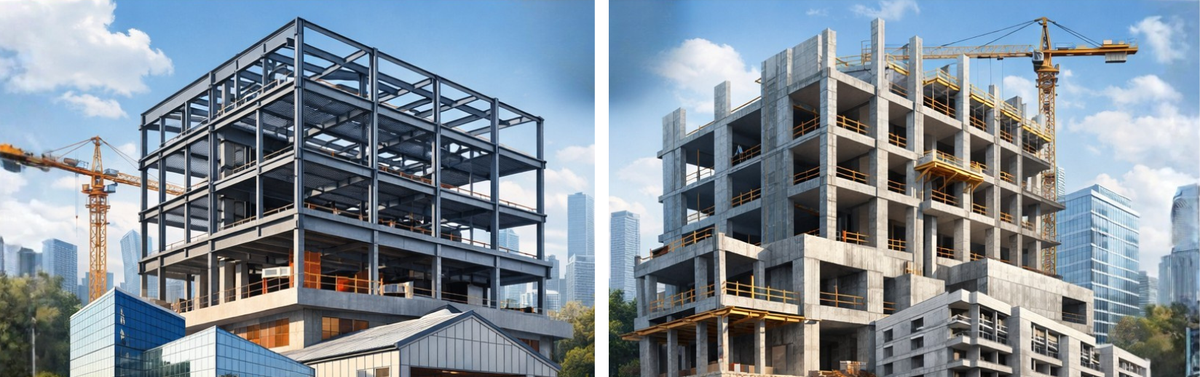
Structural Steel vs Concrete Structure: Why Steel Buildings Are the Future of Modern Construction
Introduction
The construction industry is constantly evolving as developers, engineers, and project owners seek faster, stronger, and more cost-efficient building solutions. One major shift in modern construction is the growing preference for structural steel buildings over traditional concrete structures. Structural steel offers advantages in speed, strength, sustainability, and flexibility that make it an ideal choice for many commercial, industrial, and infrastructure projects.
In this article, we explore why structural steel buildings are increasingly becoming the preferred alternative to concrete construction.
1. Faster Construction Time
One of the biggest advantages of structural steel buildings is the significant reduction in construction time. Steel components are prefabricated in factories and then transported to the construction site for quick assembly. Unlike concrete, which requires curing time and extensive formwork, steel structures can be erected rapidly.
Benefits:
- Reduced project timelines
- Faster return on investment for developers
- Lower labour costs
For large-scale infrastructure or industrial projects, speed can directly impact profitability, making steel an attractive option.
2. Higher Strength-to-Weight Ratio
Structural steel has an exceptionally high strength to weight ratio compared to concrete. This means steel can support greater loads with less material, resulting in lighter structures and more efficient designs.
Key Advantages:
- Longer spans without intermediate columns
- More usable floor space
- Better structural performance in high-rise buildings
Because of this strength, steel structures are commonly used in airports, industrial buildings, warehouses, and high-rise towers.
3. Design Flexibility and Architectural Freedom
Steel provides greater flexibility for architects and engineers. Unlike concrete structures, steel can be easily moulded into various shapes and configurations, allowing designers to create innovative and complex architectural forms.
What this enables:
- Large open floor plans
- Curved or complex building designs
- Easy future expansions or modifications
For modern commercial spaces and infrastructure projects, this flexibility is extremely valuable.
4. Better Seismic and Wind Performance
Structural steel performs better during earthquakes and strong winds due to its ductility and flexibility. Concrete structures tend to be brittle, while steel can bend without breaking, absorbing energy during seismic activity.
Safety benefits:
- Reduced risk of sudden structural failure
- Better resistance to dynamic loads
- Improved safety in earthquake-prone regions
This makes steel structures a preferred option in areas with high seismic activity.
5. Sustainability and Environmental Benefits
Sustainability is becoming a critical factor in modern construction, and structural steel performs well in this area. Steel is 100% recyclable and can be reused multiple times without losing its strength or quality.
Environmental advantages:
- Reduced construction waste
- Lower environmental impact
- High recyclability
Using steel can also contribute to green building certifications and sustainable development goals.
6. Lower Life-cycle Costs
Although the initial cost of structural steel may sometimes appear higher than concrete, the overall life-cycle cost is often lower.
Why?
- Faster construction reduces financing costs
- Lower maintenance requirements
- Easy repair and modification
- Higher durability
Over time, steel structures often provide better long-term economic value.
7. Easier Renovation and Expansion
Steel buildings are easier to modify, expand, or upgrade compared to concrete structures. Structural members can be added, replaced, or strengthened with minimal disruption.
This makes steel structures ideal for:
- Industrial facilities
- Warehouses
- Commercial buildings
- Infrastructure projects
Businesses can scale their infrastructure as their operations grow.
Conclusion
Structural steel buildings offer numerous advantages over traditional concrete structures, including faster construction, higher strength, greater flexibility, improved safety, and sustainability. As the construction industry moves toward more efficient and environmentally responsible building practices, structural steel is playing a crucial role in shaping the future of infrastructure and modern architecture. For developers, contractors, and project owners looking to optimize both performance and cost, structural steel remains one of the most reliable and forward thinking construction solutions.